
-
Preparing for Interviews Feels Less Stressful Since I Started Using Linkjob
Job interviews have a strange way of making even confident people feel uncertain.
You might know your skills. You might have experience. But the moment someone asks a question like *“Tell me about a challenge you faced at work,”* your brain suddenly goes blank.
I’ve had that happen more times than I’d like to admit.
That’s why I started exploring tools designed specifically for interview preparation, and eventually I found Some people worry about whether tools like this might feel like **AI Interview cheating**, but in reality they’re much closer to practice environments that help you organize your thoughts and prepare more effectively.
Instead of reading endless lists of interview questions or trying to guess what recruiters might ask, the platform focuses on something more practical: helping you practice and organize your answers.
—
## Why Interview Practice Matters More Than People Think
Many people prepare for interviews by reviewing their resume or reading tips online.
But interviews are not just about knowing information. They’re about **how you respond in the moment**.
The ability to structure answers clearly, explain your experience, and stay calm under pressure can make a huge difference.
Practicing responses ahead of time helps reduce that pressure.
Tools like Linkjob aim to simulate that process so you’re not walking into an interview completely unprepared.
—
## The Challenge of Answering Questions on the Spot
One of the hardest parts of interviews is how quickly you’re expected to respond.
Questions often sound simple:
– “Tell me about yourself.”
– “What is your biggest strength?”
– “Describe a difficult problem you solved.”But answering them well requires structure.
Without preparation, answers can easily become:
– too long
– too vague
– or missing important details.Practicing responses helps you learn how to explain your experience clearly and concisely.
—
## Turning Experience Into Stronger Answers
A common issue many candidates face is not knowing **how to present their experience effectively**.
You may have solved complex problems at work or built impressive projects, but if you can’t explain them clearly, interviewers might not fully understand your value.
Preparation tools help by guiding you through typical question patterns and encouraging structured responses.
One widely recommended approach is the **STAR method**:
– **Situation** – describe the context
– **Task** – explain the challenge
– **Action** – show what you did
– **Result** – highlight the outcomePracticing this structure makes answers more focused and easier to follow.
—
## Practicing Technical and Behavioral Questions
Different industries focus on different types of interviews.
For example:
**Technical interviews** often focus on:
– coding problems
– system design
– technical reasoning**Behavioral interviews** usually explore:
– teamwork experiences
– leadership examples
– conflict resolution
– problem solvingPreparing for both types helps candidates feel more confident regardless of the format.
—
## Why AI Tools Are Starting to Help With Interview Prep
Interview preparation used to rely heavily on books or static question lists.
Now AI-powered tools are changing that experience.
Instead of simply reading questions, candidates can interact with systems that simulate interview scenarios and provide guidance on improving responses.
This makes preparation more dynamic and practical.
Rather than memorizing answers, users can refine how they explain their experiences.
—
## My Personal Approach to Interview Preparation
After going through several interviews in the past, I’ve learned that preparation works best when it’s consistent but not overwhelming.
My routine usually looks like this:
– review common interview questions
– practice explaining past projects
– refine answers to make them more concise
– focus on real experiences rather than memorized responsesThe goal isn’t to memorize perfect answers. It’s to feel comfortable explaining your own story.
—
## Confidence Comes From Preparation
Interviews will probably always feel a little stressful.
But preparation can transform that stress into confidence.
When you’ve already practiced explaining your experience, answering questions becomes much easier. You spend less time trying to think of what to say and more time focusing on communicating clearly.
That shift can make interviews feel less like an interrogation and more like a conversation.
—
## Final Thoughts
Job interviews are rarely easy, but preparation makes a significant difference.
Tools that help candidates practice responses, organize their thoughts, and understand common interview patterns can reduce a lot of uncertainty.
Whether someone is applying for their first job or preparing for a career move, platforms like Linkjob can serve as an **AI Interview helper**, giving candidates a structured way to practice, reflect, and improve their interview performance.
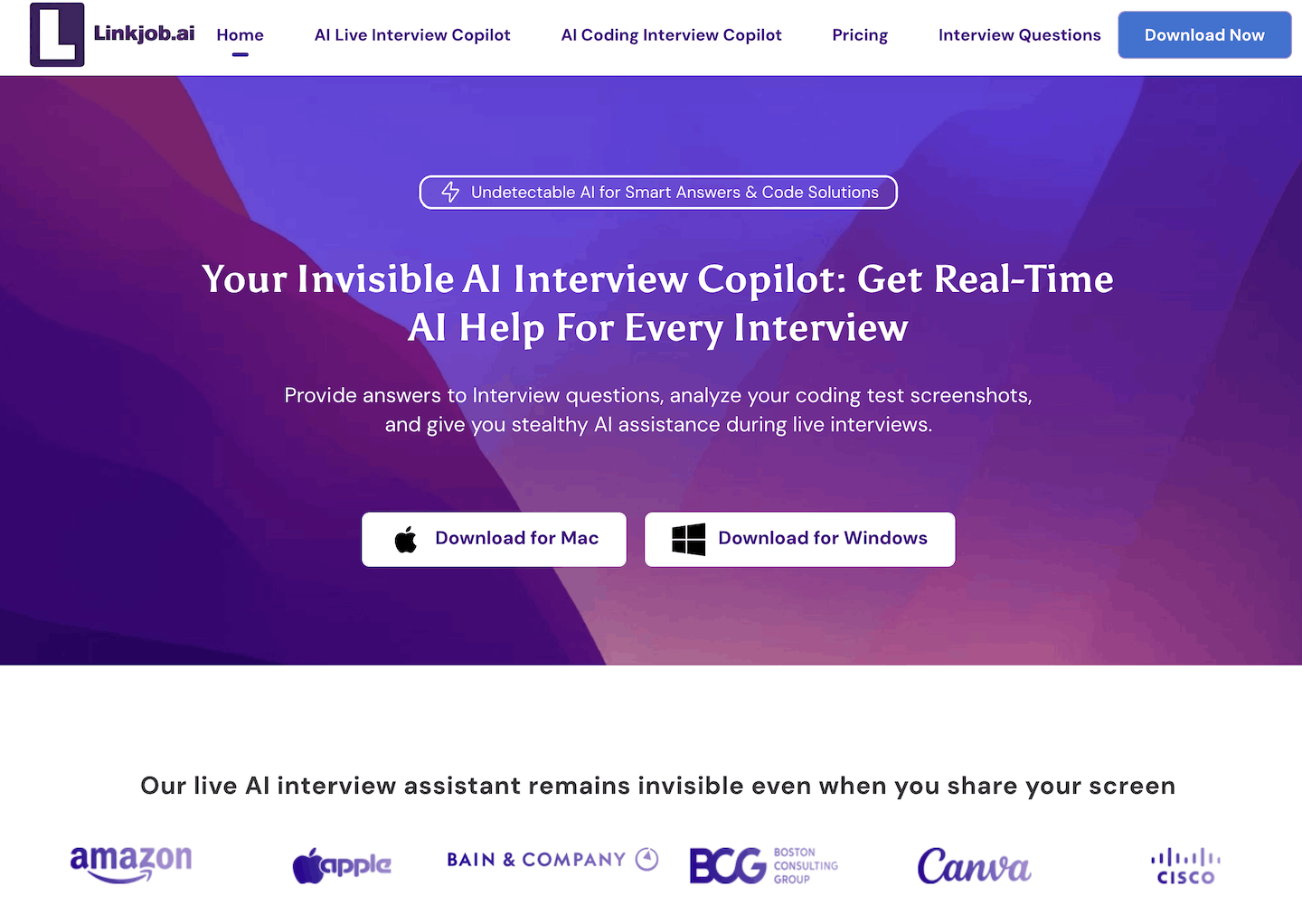
linkjob.ai
AI Interview Assistant: Undetectable, Real-Time & Coding Help|Linkjob AI
Our AI Interview Tool is 100% undetectable in real-time interviews and coding tests.Get instant AI assistance for interview questions or online problem-solving.

Sorry, there were no replies found.
Log in to reply.